
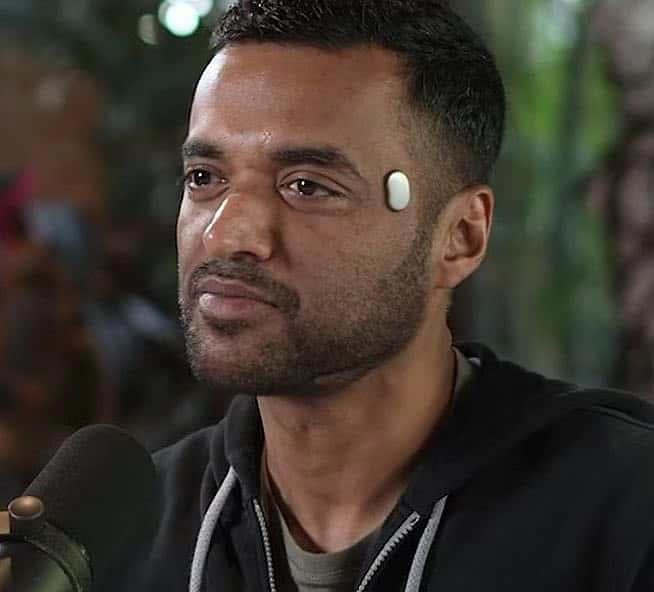

Deepinder Goyal has unveiled a teaser for his experimental wearable device called Temple, offering limited details but generating significant buzz online. The announcement was made via Instagram, where he shared a promotional image and indicated that the device would soon be available to the public through a waitlist.
“The most important wearable ever made”.
The image features a close-up of a person wearing a small, white device positioned near the temple area of the forehead. In the caption, Goyal wrote, “A wearable like no other. Follow @temple to know when the waitlist opens.”
The post quickly attracted attention from users. One commenter joked about how he secured the username, while another described Temple as “a timeless everyday accessory.” A third user suggested the innovation could be transformative if successful, noting that while many companies are focused on large language models, this project appears to take a different direction.
What Is Temple?
Temple originates from research Goyal publicly introduced in November 2025, referred to as the “Gravity Ageing Hypothesis.” The theory proposes that the cumulative effects of gravity over a lifetime may gradually reduce effective blood flow to the brain. According to the hypothesis, this subtle shift could play a role in ageing and neurological health.
Speculation around the device first surfaced last year after photos circulated showing Goyal wearing a small gold gadget near his right temple. He later confirmed that Temple is an experimental instrument designed to measure cerebral blood flow with high precision and that he has been testing it on himself for more than a year.
Reports suggest the wearable is intended to detect minute changes in brain oxygenation and circulation. The data collected could potentially help researchers study how posture, movement, and lifestyle habits influence neurological health over time.
However, Temple has not been approved as a medical device. It is not designed to diagnose, prevent, or treat any medical condition.
The teaser has positioned Temple as an ambitious step into bio-monitoring technology, though further technical specifications and clinical validation details are yet to be disclosed.