

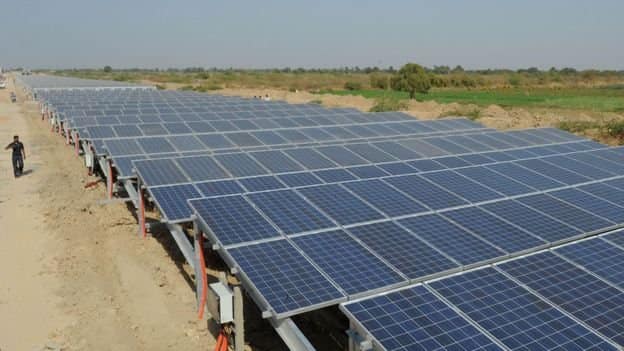

In a controversial move that escalates trade tensions between the United States and India, the Trump administration has announced a preliminary tariff of 126% on solar panels imported from India. The decision follows an investigation into alleged unfair subsidies provided to Indian manufacturers.
Tariff Announcement and Rationale
The U.S. Department of Commerce ruled that Indian solar panel producers received significant government support that distorted competition in the U.S. market. As a result, the agency set preliminary countervailing duties of 126% on Indian solar panel imports. Similar actions affected other countries, with duties as high as 143% imposed on Indonesian imports and 81% on products from Laos.
Surge in Indian Solar Exports
U.S. solar imports from India saw a dramatic increase in recent years, rising from around $83.9 million in 2022 to nearly $793 million in 2024. This surge was partly driven by American developers seeking alternatives to Chinese solar products amid earlier tariffs on China. India, along with Indonesia and Laos, accounted for more than half of all solar panel imports into the United States.
Market Reaction and Industry Impact
The tariff announcement had an immediate impact on Indian solar manufacturers. Shares of several key companies, including Waaree Energies, Premier Energies, and Vikram Solar, declined sharply as investors reacted to the potential hit to future export revenues. Indian firms that relied heavily on the U.S. market are now reassessing strategic options, including the possibility of expanding manufacturing operations in the United States or exploring other export destinations.
Implications for U.S. Solar Deployment
While the Trump administration argues that the tariffs are necessary to protect and rebuild U.S. solar manufacturing capacity and jobs, critics warn that higher import costs could slow solar adoption and increase prices for American installers and consumers. The dispute adds complexity to efforts to expand renewable energy deployment in the United States.
Next Steps in the Trade Case
The tariff measures are preliminary. A final determination, which could include even higher anti-dumping duties, is expected by July 6, 2026. Until then, uncertainty remains for manufacturers, developers and policymakers on both sides.