

The Uttar Pradesh government has prepared its 2026 annual action plan to curb air pollution in Noida, Greater Noida and Ghaziabad, with a focus on clean mobility, road improvement and dust control. The plan aims to reduce particulate matter levels, especially PM10 and PM2.5, which continue to remain above safe limits across these NCR cities.
A major thrust of the strategy is the expansion of electric mobility. Authorities plan to add more electric buses to public transport fleets while strengthening supporting infrastructure such as EV charging stations and battery-swapping facilities. Noida alone is set to add several new charging points and battery-swapping stations as part of this push to cut vehicular emissions.
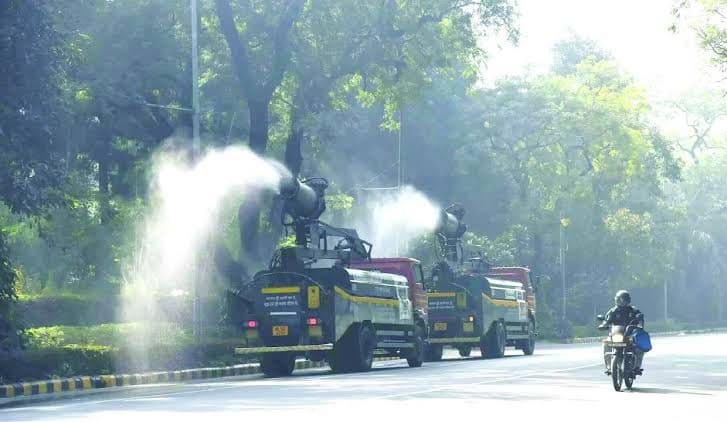
Road dust has been identified as a key contributor to pollution, prompting a renewed focus on infrastructure upgrades. The action plan includes resurfacing damaged and dusty roads, along with intensified mechanical sweeping and water sprinkling to suppress dust. These measures are expected to play a crucial role in reducing PM10 levels, particularly in high-traffic areas.
Data shared by officials show that Noida’s average air quality index has improved steadily over recent years, though fine particulate pollution remains a concern. Greater Noida and Ghaziabad have also set reduction targets, with Ghaziabad planning a long-term expansion of electric buses and charging infrastructure by the end of the decade.
Implementation of the plan will be monitored by the Commission for Air Quality Management, though experts have pointed out gaps such as the absence of specific PM2.5 targets for some cities and limited focus on issues like garbage burning and maintenance of green belts. Authorities say the success of the initiative will depend on timely execution and strict enforcement of the proposed measures.