
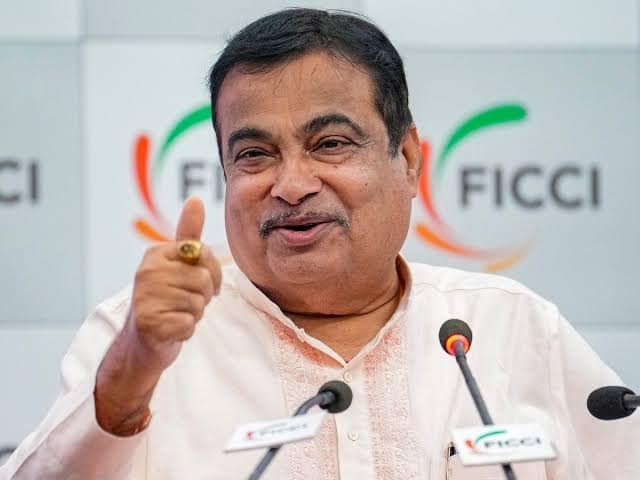

Union Minister for Road Transport and Highways Nitin Gadkari has clarified that the introduction of E20 fuel in India will not lead to the phasing out of older, non-compliant vehicles. In a written reply to Parliament, he said the government has no plan to force such vehicles off the road, addressing concerns raised by vehicle owners across the country.
Gadkari highlighted India’s heavy dependence on fuel imports, stating that nearly 87% of the country’s energy needs are met through imports. Because of this, around ₹22 lakh crore flows out of the country every year. He questioned whether this money should continue going abroad, stressing the need to cut both pollution and import dependence at the same time.
The minister said ethanol blending plays a major role in reducing pollution and supporting rural development. He pointed out that ethanol is produced from agricultural sources such as broken rice, corn, sugarcane juice, molasses and rice straw. According to him, this helps farmers earn more, creates village-level employment and supports the vision of Atmanirbhar Bharat promoted by Prime Minister Narendra Modi.
Gadkari also noted that India currently has around 550 ethanol production plants, while Indian Oil Corporation has already opened 400 ethanol fuel pumps to speed up adoption. He added that large-scale tree planting can also significantly reduce pollution, comparing its impact to that of ethanol blending.
Addressing technical concerns, Gadkari said vehicles sold before April 1, 2023, were designed for E10 fuel, while vehicles sold after that date are E20 material-compliant. Industry groups have stated that E20 fuel may reduce mileage by 2% to 4%, but it is safe to use. Gadkari earlier described ethanol as the fuel of the future, underlining its importance in India’s long-term energy strategy.